
HydroFoamer originated as a field-driven innovation in the Norwegian hydropower sector.
In 2014, the concept was developed by Guy Harris to address a fundamental problem: the cost, complexity, and environmental impact of traditional pipeline installation in steep and remote terrain.
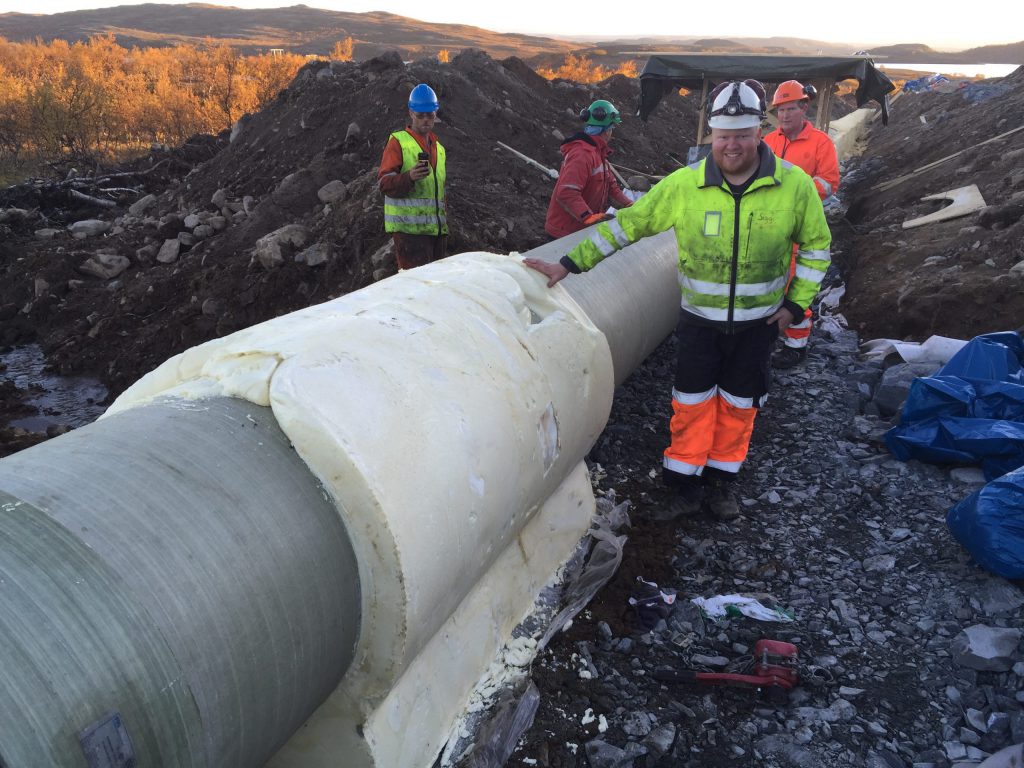
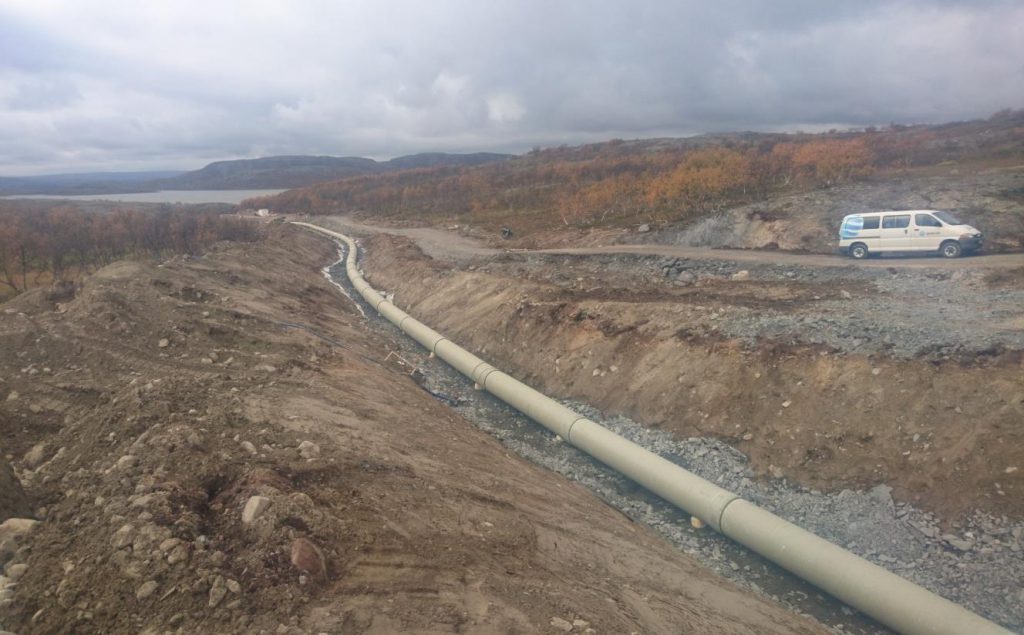
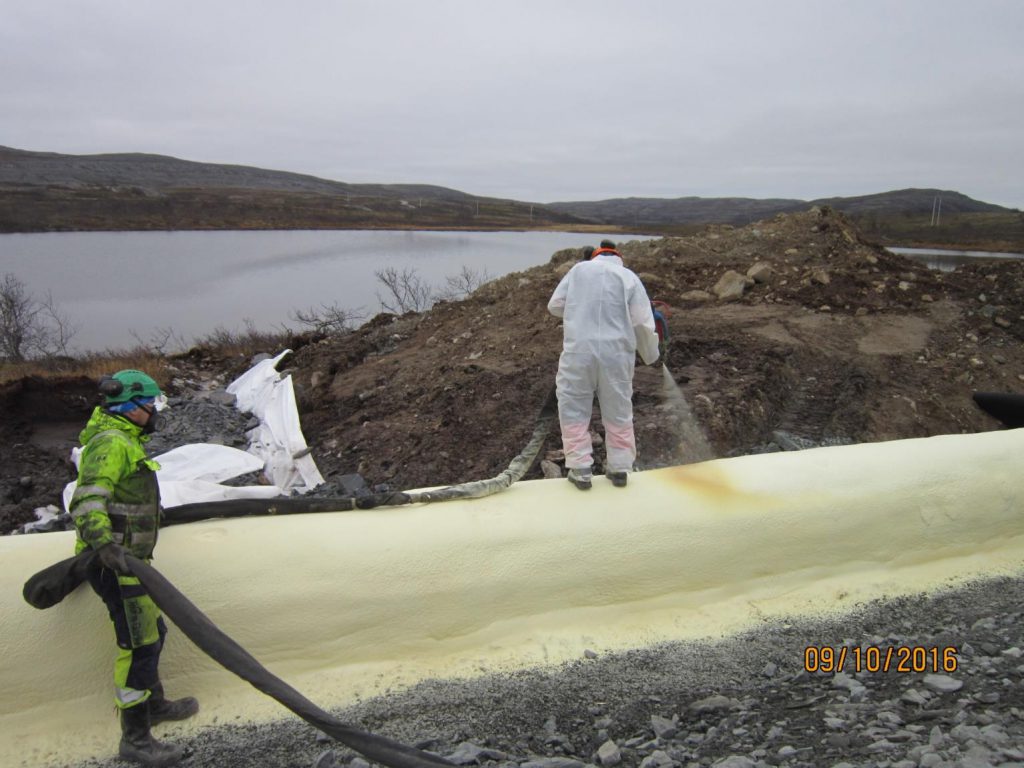
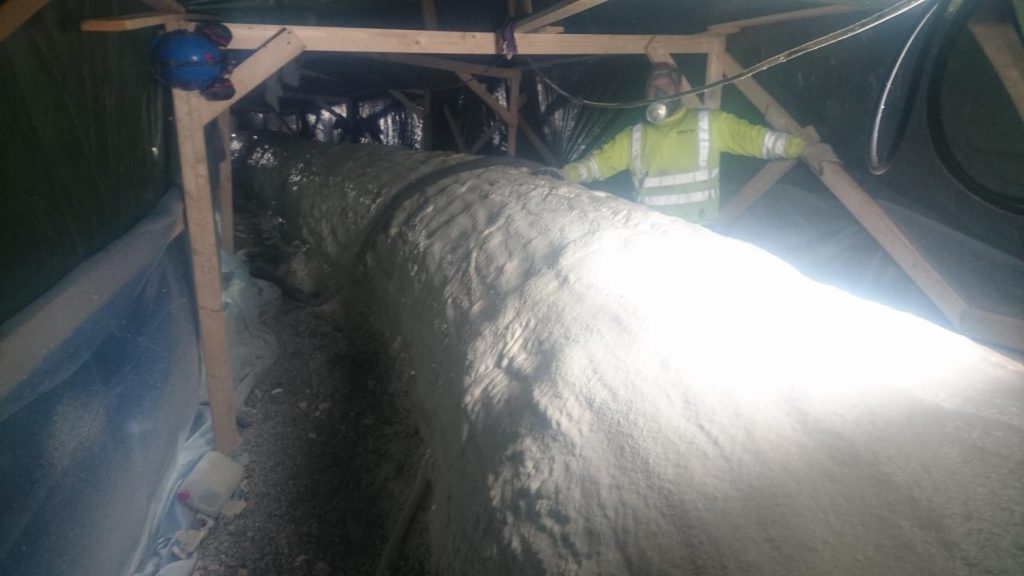
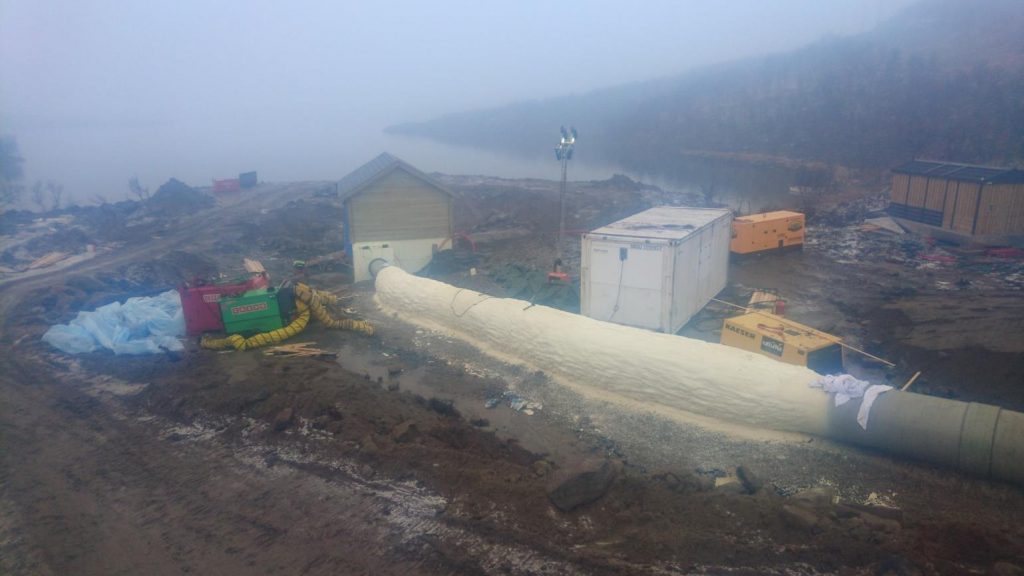
The method was rapidly validated in real-world conditions. In 2016, a full-scale commercial installation was completed for Statkraft at Adamselv in Finnmark, Northern Norway. Under severe climatic and logistical conditions, the project demonstrated that structural polyurethane foam could replace conventional ballast and thrust blocks while maintaining both geotechnical stability and structural integrity.
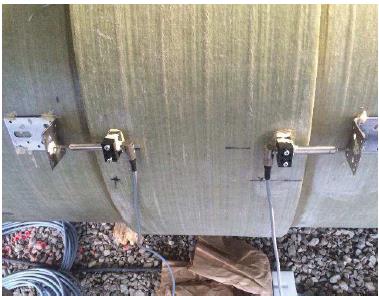
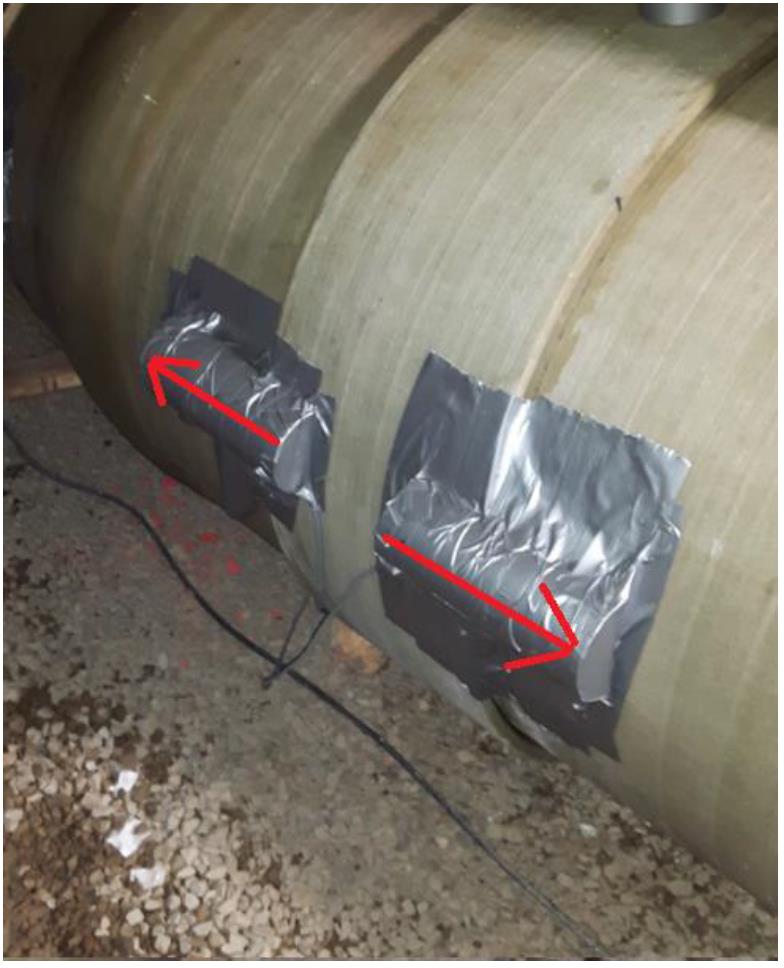
Subsequent academic work, including research conducted at NTNU, confirmed the performance of polyurethane foam in both straight and curved GRP pipe installations.
Following this validation, HydroFoamer B.V. was established to industrialise the method. The focus has been on developing a controlled, scalable installation system – including a self-contained robotic spray platform and integrated alignment verification – capable of consistent deployment across large infrastructure projects.
LOOKING AHEAD
HydroFoamer is transitioning from proven field application to industrial deployment.
The platform is now in late-stage engineering, with first large-scale deployments scheduled from 2025 onwards.
The focus is on scaling the method across hydropower, water infrastructure and energy pipeline applications – where reduced construction complexity, lower environmental impact and improved installation performance offer clear advantages over traditional approaches.